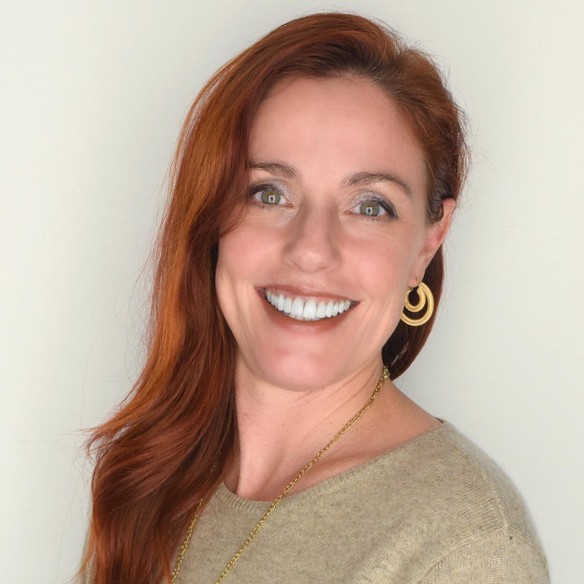
Building at the intersection of capital, convening, and systems change
$400M+
In portfolios advised and co-managed
$84T
Intergenerational wealth transfer underway
90%
Of millennial and Gen Z inheritors want capital aligned with purpose — and will move it to make that happen
"In transition periods, prediction matters — but architecture matters more. The question is not which future arrives. It is whether your wealth is already designed to shape it."
What This Work Is
Wealth & Legacy architecture for people who take both performance and purpose seriously.
Most wealth holders I work with aren't looking for another fund. They're navigating real questions: aging portfolios, a rising generation with different values, and a world shifting faster than their advisors are acknowledging. I offer the diagnostic and design work that sits upstream of allocation — helping you see what your wealth is actually positioned for, and architect it toward what comes next.
Who This Work Is For
I find and fund the geniuses we need to create a new earth.
They're everywhere — diamonds in the rough, gems hiding in plain sight. My work is finding them, funding them, and ordaining the wealth that backs them. Three doors into that work; each is complete on its own.
Door 01 · Families & Wealth Holders
Wealth & Legacy. Know what yours is for.
For individuals, couples, and families holding something significant. A clear path from one focused conversation to the full Ordination, designed around your wealth, your values, and the people it touches.
Clarity Session · The Ordination · Ongoing Support →
Door 02 · Organizations, Ventures & Cities
Apply the methodology. Build what comes next.
For organizations, companies, foundations, and cities ready to apply a proven systems change framework — and for impact ventures and nonprofits navigating capital readiness and investor relations.
L.A.B. Methodology · IR Advisory · Investor Readiness →
Door 03 · The Proof
25 years of doing the work.
Acumen Fund. UBS. White House. Davos. The United Nations. Posner Center. Dream Tank. If you want to understand where the frameworks come from before you engage — start here.
Case Studies · Experience · About Heidi →
New in 2026
Designing Capital for an Era of Institutional Transition
Something is shifting — in the workforce, in how the next generation relates to money, and in what the institutions your capital depends on are quietly assuming. This paper names what you've likely been sensing, and gives you a framework for what to do about it.
A name for the risk hiding in most long-term portfolios — the one that doesn't show up in standard assessments
A clear-eyed look at AI and technology exposure — whether yours is balanced or quietly compounding that same risk
A practical framework for designing capital that holds its ground across multiple futures
A way of thinking about your money that the next generation will actually understand — and want to carry forward
"Conditional participation is the defining risk of our era — younger generations entering institutions, assessing them, and disengaging quickly when the experience falls short.
Most portfolios haven't priced it."
- From the paper
The Systems Change L.A.B.
Twenty-five years of capital markets work, institution-building, and high-level convening — now crystallized into a replicable methodology through Dream Tank and the PEAC Institute. The Systems Change L.A.B. is how that proven body of work becomes available to organizations, companies, communities, and cities. It integrates a Nobel Peace Prize-credentialed transformational systems change framework and award-winning healing science addressing the needs of all generations coming together to build what comes next. Active pilot in Golden and Boulder, CO. Providence, anchored at Brown University where much of the methodology was born, is the designed expansion, alongside a social enterprise pathway in Nairobi. Learn more →
For Families & Wealth Holders
Your wealth is ready to mean something. Start the conversation.
You've built or received something significant. The portfolio is managed, the structures are in place, and still there's a question underneath it all that no advisor has asked you: what is this actually for?
That question is where I work. One conversation is usually where it starts.
Begin where you are. Each step complete on its own.
Every engagement is private, personal, and built around what you hold and what it's meant to do. Pricing and fit are part of our first conversation.
01 · The Entry Point
Wealth & Legacy Clarity Session
One focused 90-minute session for when a decision is in front of you: a sale, an inheritance, a new chapter. We map what you hold and what you're weighing, and name the two or three moves that matter most. You leave with questions ready for your CPA and attorney.
Two private days in which you, not just your holdings, are set in order around your purpose. Held online, in person on the land outside Boulder, or as The Threshold: 24 hours on the land with somatic and energy work and ceremony alongside Dr. Claudia Skye Zimmermann. You leave with your Declaration, your Money Manifesto, and your First Move.
For complex holdings, couples, and families building something to last. A full review of holdings, values, and legacy, ending in a design framework for your advisors and the next generation. In person, each family member, teens included, has a private session before the family comes together.
For transitions that unfold over months. A steady hand on the practical side (books, budget, coordination with your CPA and attorney), or a senior partner by application while you sell, restructure, or build a foundation, trust, or family office.
Also available through our partner: Inner Alchemy sessions with Dr. Claudia Skye Zimmermann.
Financial Strategy & Operations
A senior financial partner, without a full-time hire.
Fractional CFO · Bookkeeping & Accounting · Manifesto in Motion, 90 days of putting your Money Manifesto into practice · Opportunity Review, an independent read on a deal or fund before you commit · Strategy Hours in flexible blocks.
Where is your wealth positioned for what's coming?
A short read on how your wealth sits relative to the transition underway, in markets, in your family, and across generations. Most of what follows you won't have been asked by an advisor. About five minutes. I read every submission personally and respond with specific observations within 48 hours. Your answers stay with me. No lists, no sequence.
I read every submission personally and respond within 48 hours with specific observations. Your information stays with me.
Your assessment is in.
I'll read it personally and respond with specific observations within 48 hours. Watch for a note from heidi@heidicuppari.com.
If you'd rather talk sooner, you can book a conversation now and we'll work from your answers together.
Designing Capital for an Era of Institutional Transition
Something is shifting — in the workforce, in how the next generation relates to institutions, and in what the capital built over the last 25 years was quietly depending on. This paper names what you've likely been sensing, and gives you a framework for what to do about it.
A name for the risk hiding in most long-term portfolios — the one that doesn't show up in standard assessments
A clear-eyed look at AI and technology exposure — whether yours is balanced or quietly compounding that same risk
A practical three-part framework for designing capital that holds its ground no matter which future arrives
A way of thinking about your money that the next generation will actually understand — and want to carry forward
Get the Paper
This paper is shared by invitation and request — typically reserved for advisory clients and select wealth holders.
I share this work privately. Your information stays with me — no lists, no spam.
Your copy is ready.
Click below to download Designing Capital for an Era of Institutional Transition. It opens as a PDF — save it to read at your pace.
Why the real threat to long-duration portfolios isn't a market shock — it's the quiet erosion of the participation assumptions every holding depends on. And why it looks, in retrospect, like it happened overnight.
On the AI Paradox
Concentration Without Balance
Why concentrating in AI without counterbalancing exposure may be the same structural overreach this paper warns against — just pointing in the opposite direction. With real-world cases.
On What to Do
A Three-Layer Framework & the Transition Offset Portfolio
A practical allocation framework designed for multiple futures simultaneously — with the Transition Offset Portfolio as a design principle for capital that doesn't just hedge against change, but is architected to shape it.
Organizations · Ventures · Cities
Apply the methodology. Build what comes next.
For 25 years I built the infrastructure that makes systems change real — summits, institutions, capital networks. The Systems Change L.A.B. is how that body of work becomes available to organizations, companies, foundations, and cities ready to apply it.
And for impact ventures and nonprofits navigating investor relations, capital readiness, and how to tell their story to the people who can fund it — this is also the right door.
You might be in the right place if...
Your organization wants to embed a proven systems change methodology — not invent one from scratch
Your city, company, or foundation wants to activate the next generation as co-designers, not recipients
Your impact venture or nonprofit is approaching a capital raise and needs investor relations strategy and materials
You want to get investor-ready before the conversation — not during it
You're building something that requires all generations in the room, aligned
Investor Readiness Assessment
Where are you in the capital journey?
This is your entry point — no pitch required, no sales sequence on the other end. Answer a few questions about your organization, your stage, and your capital needs. I read every submission personally and respond with specific observations within 48 hours. The assessment itself is often useful, independent of anything else.
I read every submission personally and respond within 48 hours with specific observations — not a sales sequence. Your information stays with me.
Your assessment is in.
I'll read it and respond with specific observations within 48 hours. Check heidi@heidicuppari.com and add it to your safe senders list.
In the meantime, if you haven't read the Designing Capital paper — that's the best introduction to how I think about wealth architecture.
The Systems Change L.A.B. — For Organizations
A proven methodology, made replicable.
The L.A.B. (Local Action Blueprint) is a structured civic innovation methodology that connects young leaders, intergenerational mentors, institutional partners, and city governments into design cycles that produce real, implementation-ready outcomes. Built over a decade through Dream Tank, deepened through partnership with PEAC Institute.
For Companies & Employers
Intergenerational Leadership Design
A structured process for aligning your workforce across generations — not through workshops, but through real co-design. Young employees and senior leaders working on actual company challenges together, producing implementation-ready recommendations. Grounded in Nobel Peace Prize-credentialed systems change methodology and award-winning healing science.
Learn more →
For Cities & Foundations
Systems Change L.A.B. Partnership
License and implement the L.A.B. methodology in your city, region, or community. Includes full facilitation design, training for local teams, and a Local Action Blueprint process culminating in deliverables to city leadership or foundation partners. Active model: Golden and Boulder, CO.
Learn more →
For Impact Organizations
IR Advisory & Capital Architecture
For impact ventures and mission-driven orgs — for-profit and nonprofit — building self-sustaining models. IR strategy, narrative, introductions, and ongoing advisory for organizations that need capital to move.
Learn more →
Financial Operations
Fractional CFO & Bookkeeping
For impact ventures and mission-driven organizations that need senior financial leadership without a full-time hire: cash flow, budgeting, board and investor reporting, capital-raise readiness, and clean books handed to your CPA.
Private gatherings and salons designed to convene capital, build relationships, and activate your mission across generations and sectors.
These are not panels or presentations. They are experiences engineered to produce real momentum: relationships formed, commitments made, and next steps that actually happen. The design draws on 25 years of convening architecture — from the White House and Davos to intimate founder gatherings that turned into Boulder community institutions.
"Curated the original intimate gathering for the founders of what would become Junkyard Social Club — then called 'Science Galaxy.' That room evolved into a co-created intergenerational play space now a pillar of the Boulder community. The right room at the right moment changes everything."
Example:I Am Wealth in Flow — a Private Invite Only Event at Riverside, Boulder, bringing wealth holders into direct relationship with RiverTree's regenerative ecosystem and capital stewardship model. Designed, curated, and facilitated by Heidi.
Getting investor-ready is a design problem, not a pitch problem.
Most impact ventures and nonprofits lose the capital conversation before it starts — not because the work isn't strong, but because the story, the structure, and the materials aren't built for the people they're talking to.
I've been on both sides of this table for 25 years. I raised early funds for Acumen Fund alongside Jacqueline Novogratz. I co-managed a $400M+ impact portfolio at UBS. I know what moves capital and what doesn't — and it's almost never about the deck.
Investor narrative development — your story in the language of capital
Capital raise structure and sequencing strategy
Pitch materials review and strategic reframing
Investor introductions where aligned — curated, not broadcast
Ongoing IR advisory retainer for ventures in active raise
A short diagnostic that surfaces exactly where you are — and where the gaps are — before you start any investor conversation. Free. Takes about 10 minutes. You'll get a response with specific observations within 48 hours.
If you're also a wealth holder or family office — the Designing Capital paper is written for you.
For Companies & Employers
Your workforce is where institutional transition shows up first.
Worker engagement has fallen from 36% to 31% in five years — 8 million fewer engaged workers. The cost: $8.9 trillion annually in lost productivity. The cause isn't compensation or perks. It's conditional participation — a generation that enters institutions, assesses them, and disengages quickly when the experience falls short.
The answer isn't a workshop. It's architecture.
What the L.A.B. actually does.
The Systems Change L.A.B. is not a training program or a retreat. It's a structured design process — grounded in a Nobel Peace Prize-credentialed systems change methodology and award-winning healing science — that puts your young employees and senior leaders in the room as co-designers of real company challenges.
The output isn't a deck about culture. It's implementation-ready recommendations delivered to leadership, with the next generation's fingerprints on them. Which means they also own the outcomes.
"When young people are given genuine decision-making authority over real challenges, civic participation surges, institutional trust rebuilds, and participants become more engaged for years afterward."
Pattern documented across 12+ city implementations
What a company engagement includes:
Discovery — mapping your generational participation gaps and the specific company challenges worth working on together
Design sprint — structured intergenerational co-design process, facilitated using the L.A.B. methodology
Local Action Blueprint — implementation-ready recommendations delivered to leadership
Integration — how to embed what emerged into actual company operations, not just a report
You might be ready for this if...
Your Gen Z and millennial employees are high-potential but quietly disengaging
You're building intergenerational teams and the friction is real, not imaginary
You've done the workshops. They haven't moved the needle
Your senior leadership wants to understand what the next generation actually sees — not a survey, a real conversation
You're a purpose-driven company and you want that purpose to be legible to the people who most need to believe it
The investment.
Engagements are scoped to your company and your challenge — there's no standard package because the work is genuinely custom. Most engagements run 6–12 weeks from scoping to Blueprint delivery. Pricing on inquiry.
I work with a small number of company partners at a time, and I'm selective — the methodology works best when the company leadership is genuinely ready to hear what comes back.
Not sure if your company is ready? Take the Investor Readiness Assessment →
Why this works. The methodology behind it.
The L.A.B. is built on 25 years of systems change practice — from producing the Success 2020 Coalition at the White House to co-creating the Posner Center for International Development — and deepened through partnership with PEAC Institute, whose Nobel Peace Prize-credentialed methodology for transformational systems change is integrated into every engagement. The healing science component addresses what's actually underneath disengagement: not bad attitudes, but unprocessed uncertainty about the future.
The result is a design process that works at the level of real outcomes, not just influence.
For Cities, Foundations & Government
Civic infrastructure for the participation economy.
Only 21% of Americans now believe the next generation will be better off — down nine points in a single year. Cities and foundations that ignore this are building programs on a foundation of eroding trust. The ones getting it right are putting young people in the room as decision-makers, not beneficiaries.
The L.A.B. is how that happens at scale, with methodology behind it.
What the L.A.B. produces.
Boston's Youth Lead the Change program gave young people decision-making authority over $1M in city budget allocations — projects designed, prioritized, and voted on entirely by youth. It worked so well the city expanded it citywide with $2M annually. Cambridge is in its 12th consecutive participatory budgeting cycle, with residents having directed over $10.5M to 79 community-designed projects since 2014.
The Systems Change L.A.B. takes this model deeper — adding intergenerational mentorship, university partnerships, a Nobel Peace Prize-credentialed methodology, and a structured Local Action Blueprint process that produces real deliverables to city leadership or foundation partners with defined implementation pathways.
It's currently active in Golden and Boulder, CO, in partnership with the Mayor of Golden and Colorado School of Mines. Providence, anchored at Brown University where much of the methodology was born, is the designed expansion, alongside a social enterprise pathway in Nairobi.
"The pattern across every city that has tried participatory youth design is consistent: when young people are given genuine decision-making authority over real resources, civic participation surges and trust in local institutions rebuilds."
Documented across 12+ city implementations globally
Partnership models.
City Partner
A formal partnership in which the city co-hosts the L.A.B. pilot, provides access to youth cohorts and institutional partners, and receives Local Action Blueprint deliverables. Includes co-design of challenge themes aligned to city priorities.
Foundation Co-Funder
Foundations fund a city pilot — either in an existing L.A.B. city or a new one — and receive documentation, data, and the Blueprint as proof of impact for their own reporting and learning. Natural fit for community foundations, place-based funders, and foundations with youth or civic priorities.
Foundational Co-Creator
For foundations or government agencies that want to go deeper — co-designing the L.A.B. model for their geography, co-creating the training curriculum, and building toward a licensed implementation they can run independently.
Most youth civic programs produce presentations. The L.A.B. produces Blueprints — implementation-ready Local Action Plans with defined pathways, delivered to actual decision-makers. The difference is methodology: the L.A.B. integrates a Nobel Peace Prize-credentialed transformational systems change framework and award-winning healing science that addresses the full human experience of young people navigating an uncertain future.
This isn't programming. It's infrastructure — designed to be documented, replicable, and licensable so cities can run it themselves over time.
For Impact Organizations
You're doing the right work. The capital conversation is the hard part.
Impact ventures and mission-driven organizations — for-profit and nonprofit, with self-sustaining models — often do the work well and struggle to talk about it in the language investors and funders actually use. The story is strong. The structure isn't built for the room.
I've been on both sides of this table for 25 years. I know exactly where the gap is.
The IR advisory offer.
I raised early funds for Acumen Fund alongside Jacqueline Novogratz — one of the first impact funds before "impact investing" was a category. I co-managed a $400M+ ESG and impact portfolio at UBS, sat on the investor side of hundreds of pitches, and have helped organizations from nonprofit social enterprises to for-profit impact ventures find and close aligned capital.
What I offer isn't a pitch coach or a deck designer. It's the upstream diagnostic — figuring out what's actually in the way, and architecting the story, structure, and sequencing that gets you to the right investor conversations.
Investor narrative development — your story in the language of capital, not mission
Capital raise structure — what type of capital, in what sequence, from whom
Pitch materials review and strategic reframing
Investor introductions — curated and warm, not broadcast
Ongoing IR advisory retainer for organizations in active raise
"I raised early funds for Acumen alongside Jacqueline Novogratz before 'impact investing' was a category — and sat on the investor side of hundreds of pitches at UBS. The gap is almost never the work. It's the story, the structure, and the sequencing."
From 25 years of capital work — Acumen Fund, UBS, and independent advisory
The L.A.B. for impact organizations.
Impact organizations often have a participation problem they haven't named yet. The communities they serve are engaged as beneficiaries, not designers. The next generation of staff is present but conditionally so. The methodology and the capital story are separate conversations when they should be one.
The L.A.B. helps impact organizations embed the participatory design infrastructure that makes their model more fundable, more scalable, and more legitimate — because the communities they work with helped build it.
For self-sustaining models specifically:
If you're building toward earned revenue — training, licensing, consulting, or program fees alongside philanthropic capital — the L.A.B. methodology is itself a licensable asset. I can help you think through how the methodology becomes a product, how to price it, and how to position it to both funders and paying clients simultaneously.
The Posner Center for International Development started with a vision, a committed co-creator in Andrew Romanoff, and no building. The IR work — securing the founding naming grant, designing the capital case, organizing the launch event with President Bill Clinton — was what made it real. The Posner Center now anchors the international development community in Denver.
The Junkyard Social Club started with an intimate gathering for a group of founders with a working title of "Science Galaxy." The architecture of that first room — who was in it, how the conversation was designed, what it made possible — is what allowed something much larger to emerge. It's now a pillar of the Boulder community.
The methodology works at any stage and any scale. The question is always the same: what's in the way between the work you're doing and the capital, the community, or the infrastructure that should be behind it?
The Proof
25 years of doing the work. Here's what it looks like.
The frameworks I offer wealth holders, organizations, and ventures weren't developed in a classroom. They were built across two and a half decades of raising capital, producing rooms, building institutions, and working directly with the communities where systems change either happens or doesn't.
$400M+
In ESG and impact portfolios advised and co-managed at UBS Wealth Management
$100M+
Raised for impact initiatives across a 25-year career
40+
Countries represented in global youth innovation and systems change work
10 yrs
Building and testing the Dream Tank / L.A.B. methodology before launch
Case studies & proof points.
These are selected moments from 25 years of work — updated to reflect where the work has gone since. The framing has evolved; the substance is real.
Capital & Investor Relations · Early Stage
Acumen Fund — Building the Infrastructure of Impact Investing
As Director of Investor Relations at Acumen Fund alongside Jacqueline Novogratz and Seth Godin, raised early funds for one of the first impact investment organizations before the category existed. Increased external fundraising volumes by over 100%. The work helped establish the infrastructure that the impact investing field now takes for granted.
Institution-Building & Convening
Posner Center for International Development
Co-created the Posner Center alongside Andrew Romanoff — secured the founding naming grant, organized the launch event featuring President Bill Clinton, and established it as a collaborative hub for international nonprofits in Denver. Now home to organizations including Denver Urban Gardens and Engineers Without Borders. A proof that the right convening architecture creates institutions that outlast the moment.
White House · Cross-Sector Systems Change
Success 2020 Coalition
Produced a cross-sector summit at the White House in partnership with Obama's Office of Technology and Innovation, the U.S. State Department, Starlink, and leading private funders — convening global leaders around the goal of connecting 1.5 billion more people online. An early proof that capital, technology, and government can be brought into the same room around a single systems change objective.
Mission Activation · Community Infrastructure
Junkyard Social Club, Boulder CO
Curated the original intimate gathering for the founders — then called "Science Galaxy" — that evolved into what Junkyard Social Club is today: a co-created, intergenerational immersive play space built from repurposed junkyard finds that is now a pillar of the Boulder community. A proof that the right room, at the right moment, with the right facilitation, can birth institutions nobody planned.
Global Convening · Davos 2020 · 50th WEF Anniversary
The Digital Economist — World Economic Forum Private Event
Produced a sold-out, invitation-only 250-person event over five hours at Davos during the 50th Annual Meeting of the World Economic Forum — co-creating the launch of The Digital Economist alongside global leaders, technology pioneers, and impact investors. People couldn't get in. The kind of room that only happens when the architecture is exactly right.
Co-led a global initiative engaging youth from over 40 countries to develop solutions during the COVID-19 crisis — culminating in a summit addressing racial justice and youth civic agency. Generated international media attention across 80+ outlets. A proof point that young people, given real problems and real authority, produce real solutions.
The Systems Change L.A.B. — Live in the field.
The L.A.B. is currently active in Golden and Boulder, CO — in partnership with the Mayor of Golden and Colorado School of Mines. Providence, anchored at Brown University where much of the methodology was born, is the designed expansion, alongside a social enterprise pathway in Nairobi, Kenya. The methodology is documented, replicable, and being deepened through partnership with PEAC Institute.
Thought leadership & writing.
Selected writing and frameworks — updated framing where the substance applies to the current moment.
Capital Architecture · 2026
Designing Capital for an Era of Institutional Transition
The paper that anchors this site — on structural risk, conditional participation, and the architecture of resilient capital. Written for wealth holders and family offices. The foundational document for how I think about capital design right now.
When Safety Breaks, the Future Can't Breathe — and What We Can Do About It
Written in the days after December 13, 2025 — on what happens when the conditions that make futures possible are themselves under threat, and what systems change looks like in that moment. Most recent published writing. New thinking reflecting this site's frameworks is in progress.
From Acumen to the $84T Transfer — What Actually Changed
Impact investing looked completely different in 2004 when Acumen was raising its first funds. The infrastructure, the vocabulary, the investor expectations — all built over two decades. What that history means for the intergenerational wealth transfer moment we're in now. Essay in progress.
What Holds When Systems Break: A Field Report from the Future
"The future isn't a place we arrive. It's a frequency we learn to hold." — On resilience, systems change, and what it takes to stay oriented when the ground is moving. From the field.
Selected appearances — on youth innovation, systems change, impact investing, and what it takes to build futures worth living in.
Most Recent · Leaders Who Care
Dreamtanking with Heidi Cuppari
A conversation on building Dream Tank, systems change from the inside out, and what it means to lead with both capital intelligence and human wisdom. Recent and wide-ranging.
On what it actually takes to recruit, retain, and work alongside Gen Z — and why the organizations getting this right are the ones treating it as a systems change question, not an HR one.
On the intergenerational dynamics reshaping every institution — and the capital, pedagogy, and community infrastructure required to build what actually comes next.
Co-host David Cohen and Heidi on radical imagination, the gamer mindset as a systems change tool, and why young people hold solutions adults can't see yet. Features Dream Tank innovator Amalia Rose Battle.
A two-part deep dive into Heidi's career arc — from UBS and Acumen to Dream Tank, impact investing, and what 25 years at the intersection of capital and systems change actually looks like.
An introduction to Heidi's work at the intersection of sustainable finance, youth innovation, and systems change — her origin story and the thread that connects it all.
"I work with wealth holders who sense their capital can do more — and are ready for a conversation that takes that instinct seriously."
I've spent 25 years building at the intersection of capital, convening, and systems change — raising early funds for Acumen Fund alongside Jacqueline Novogratz, co-managing a $400M+ ESG and impact portfolio at UBS Wealth Management, producing summits at the White House and the World Economic Forum in Davos, and co-creating institutions including the Posner Center for International Development.
That body of work — in capital markets, investor relations, and the architecture of rooms where decisions get made — is where the frameworks I use with clients were built and tested. It predates Dream Tank. It is 25 years of learning what moves capital, what moves people, and what it takes to build things that outlast their founders.
What I offer now is wealth architecture — the diagnostic and design work that sits upstream of allocation decisions. I work with a small number of wealth holders and family offices who are asking the questions that matter for the next decade.
Why this work. Why now.
The $84 trillion intergenerational wealth transfer is not a future event. It is happening in families, in conversations between parents and children, in portfolios that were built for one world and are now being asked to navigate another.
Most advisors are excellent at the technical work. What they're rarely equipped for is the upstream question: what is this capital actually for, and how do you design it to serve that purpose across generations — and across the full spectrum of human readiness to meet this moment?
The Systems Change L.A.B. is the current expression of 25 years of this work — crystallized into a replicable methodology that organizations, companies, communities, and cities can apply. Developed through Dream Tank and deepened through partnership with PEAC Institute, the L.A.B. integrates a Nobel Peace Prize-credentialed transformational systems change framework and award-winning healing science designed for all generations coming together to build what comes next.
The advisory work I do with wealth holders and the civic infrastructure I build through the L.A.B. are not separate projects. They are the same conviction — that capital can be a force for the world we actually want to leave behind.
Selected Experience
Acumen FundDirector of Investor Relations
UBS Wealth ManagementESG & Impact — Institutional Consulting Group
White House Success 2020 CoalitionConvening Producer — w/ Obama Office of Technology & Innovation
World Economic Forum, DavosArchitect & Producer — Cross-sector convenings
United NationsConvening Producer & Systems Change Advisor
Posner Center for International DevelopmentCo-Creator — Naming grant, Clinton launch event
Dream Tank | Systems Change L.A.B.Founder & CEO, 2016–Present
PEAC InstitutePartner — Nobel Peace Prize-credentialed systems change methodology
FINRA Series 7 & 66 · CO Life Insurance ProducerFormerly held
Education
Brown UniversityB.A. Organizational Behavior & Management, 1995 · Division I Swimmer
New York UniversityArts & Antiques Appraising
Capra CourseSystems Thinking
Wealth & Legacy Architect · Systems Change Advisor
Start with the paper or book a call.
The Designing Capital paper is the best introduction to how I think. Most conversations start there.